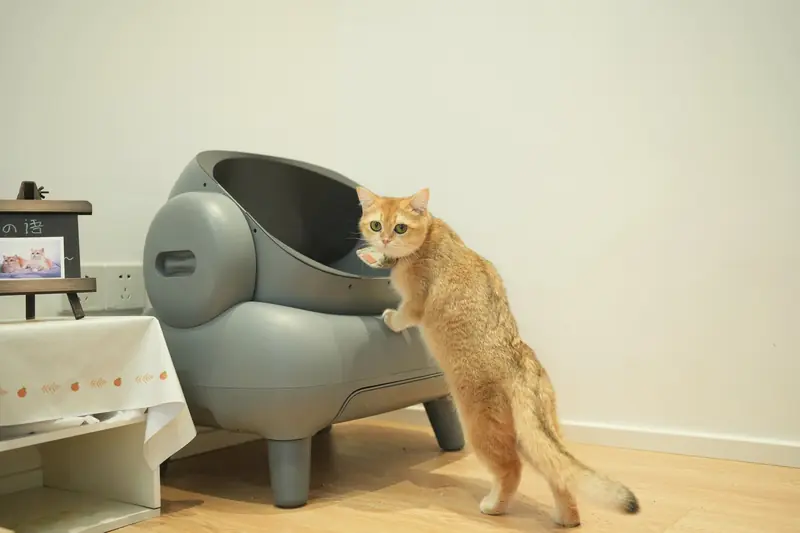
Self-Cleaning vs Regular Litter Box: Worth the Money?
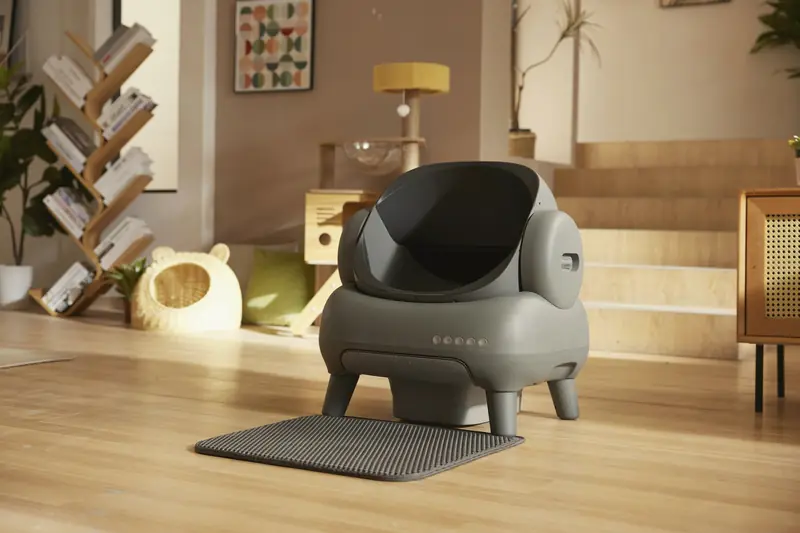
A self-cleaning box moves waste into a drawer for you, while a regular box needs a daily scoop. Both need washing, and both follow the same ASPCA rules on box count and litter depth. The right choice depends on your budget, your cat's weight and how much upkeep you want to handle.
Self-cleaning litter box: the better choice if…
- You want fewer daily scoops and can pay for the machine and its refills.
- Your cat is an adult above the maker's stated minimum weight.
- You have a power outlet near a spot where the box can sit.
Regular litter box: the better choice if…
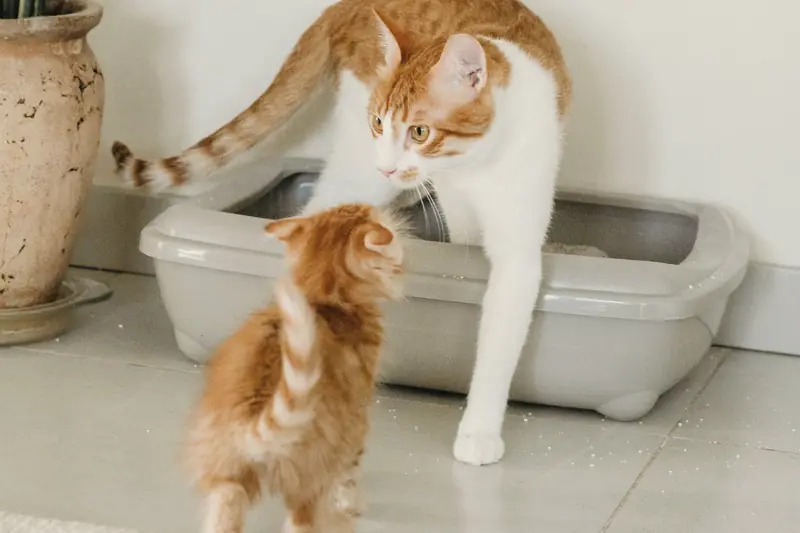
- You have a kitten, a small cat or a senior that may not suit a sensor-based machine.
- You want a low upfront cost and no consumables to reorder.
- You prefer a simple box you can wash, with nothing to jam.
Jump to section
At a glance
| Point | Self-cleaning litter box | Regular litter box |
|---|---|---|
| Cost | Higher upfront, plus consumables | Low upfront, litter only |
| Daily scooping | Machine sifts; you empty the drawer | You scoop at least daily |
| Kitten minimum weight | Maker-stated, for example 3 lb | No weight limit |
| Consumables | Bags, trays or filters on many models | Litter only |
| Noise and power | Motor noise; needs power or batteries | Silent; no power |
| Jams and failures | Sensors and motors can fail | Nothing to jam |
| Multi-cat homes | Still one box per cat plus one | Still one box per cat plus one |
Upfront and ongoing cost
A self-cleaning box costs more up front than a plain pan, and some models add running costs for bags, trays, filters or a specific litter. A regular box costs the price of the pan and your litter. Compare current prices on Amazon for our self-cleaning box picks and our regular litter box picks, then add a year of refills to the self-cleaning total.
Daily scooping time
ASPCA advises scooping at least once a day (ASPCA). A regular box makes that your job. A self-cleaning box does the sifting for you, so your task becomes emptying the drawer. That is less frequent, though not zero, and the maker's listing says how many days a drawer lasts.
Kitten and small-cat weight limits
Sensor-based boxes need a minimum cat weight. One maker's FAQ states that its scale does not recognize cats under 3 lb (1.3 kg) and says to use semi-automatic mode until the kitten is heavier (Litter-Robot FAQ). That is one maker's figure for one model, so check the manual for any box you consider. A regular box has no such limit. Ask your vet about your kitten.
Consumables
Check what the box needs besides litter. Some models use waste bags, liners or special trays, and some need the maker's own litter. ASPCA says most cats dislike liners (ASPCA), so a box that depends on one is worth a second look. Our guide to cat litter covers what goes in the box.
Noise and power needs
A self-cleaning box has a motor, so it makes noise during a cycle and needs a plug or batteries. Read the listing for any noise claim and treat it as a maker statement. A regular box is silent and needs no power, which also means it works through a power cut.
Failure modes and jams
A machine can jam or lose a sensor reading, and a stuck cycle means you scoop by hand. A regular box has nothing to break. Read the manual for what the maker says to do when a cycle fails, and keep a scoop on hand either way.
Multi-cat homes
A self-cleaning box does not change the count. ASPCA advises one box per cat plus one extra, whatever the type (ASPCA). Three cats need at least four boxes. A self-cleaning box can be one of them, and your setup guide explains where to put the others.
Which should you buy?
If you want fewer daily chores and your cat is above the maker's stated minimum weight, a self-cleaning litter box can be worth the cost. If you have a kitten, want low cost or prefer a simple setup, a regular litter box does the job.
Alternatives
Not sure which litter goes in either box? Read clumping vs non-clumping cat litter.
FAQ
Do self-cleaning litter boxes need less cleaning?
They reduce daily scooping, but ASPCA still advises washing the box weekly and fully replacing the litter (ASPCA).
Can I use a self-cleaning box for a kitten?
Check the maker's minimum weight. One maker states its scale does not recognize cats under 3 lb (1.3 kg) (Litter-Robot FAQ). Ask your vet when your kitten is ready.
How many litter boxes do I need with a self-cleaning one?
One per cat plus one extra, as ASPCA advises (ASPCA).
Related
-
Buying guide
Best Self-Cleaning Litter Boxes
Minimum cat weight, entry height, drawer size and upkeep, side by side.
-
Buying guide
Best Litter Boxes (Large, Low-Entry and High-Sided)
Size, side height, entry height and material for every cat.
-
-
Comparison
Clumping vs Non-Clumping Cat Litter
What cats prefer, how scooping works and what fits your box.
-
Guide
Litter Box Setup: How Many, Where, and How Often to Clean
Box count, placement, litter depth and cleaning schedule from ASPCA and Cornell.
Get the Cat-Ready Home Checklist
A printable checklist built on AAFP, ASPCA, Cornell and FDA guidance, from how many litter boxes you need to which flowers to keep out. Free, and sized for the fridge door.